
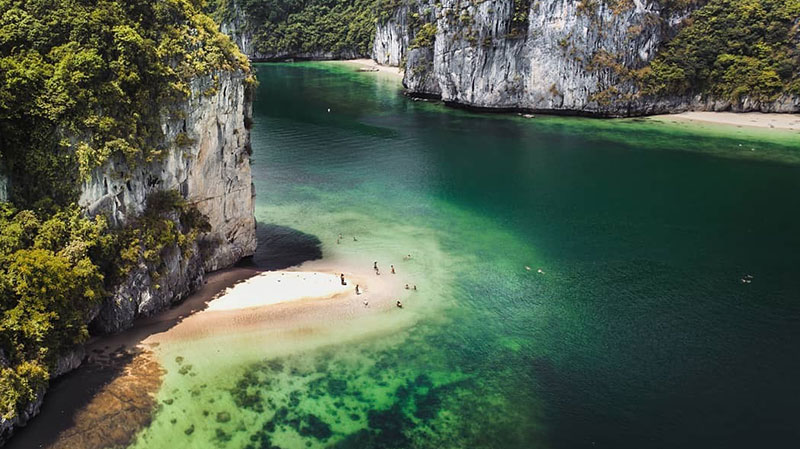
Halong Bay is famous around the world for its emerald waters, towering limestone islands, and spectacular seascapes. Yet behind this iconic scenery lies an extraordinary natural environment filled with diverse marine, coastal, and terrestrial ecosystems. The biodiversity of Halong Bay is one of the reasons this UNESCO-recognized destination is so important—not only for tourism, but also for conservation and scientific research.
For travelers looking to experience this natural heritage, Grand Pioneer Cruises Halong offers an opportunity to explore the bay while appreciating the remarkable ecosystems hidden among its islands, caves, beaches, and calm waters.
A Unique Ecosystem Shaped by Limestone Islands
The distinctive landscape of Halong Bay has been formed over millions of years. Hundreds of limestone islands and islets rise dramatically from the sea, creating a complex network of habitats.
Each island can support different forms of life depending on its size, elevation, vegetation, exposure to sunlight, and access to freshwater. Cliffs provide nesting areas for birds, while sheltered waters around the islands create suitable environments for marine organisms.
This combination of limestone formations, seawater, tidal zones, forests, and caves makes Halong Bay far more than a scenic destination. It is a living ecosystem where different species interact with one another.
Rich Marine Biodiversity in Halong Bay
The waters surrounding the limestone islands support a variety of marine life. Coastal and shallow-water habitats provide important environments for fish, mollusks, crustaceans, plankton, and other aquatic organisms.
Areas with rocky shores and tidal flats are particularly important because they create feeding and breeding grounds for numerous species. The movement of tides also continually changes the conditions of these habitats, allowing different organisms to thrive at different times.
For visitors cruising through the bay, much of this biodiversity exists beneath the surface. What appears to be a peaceful stretch of emerald water may actually contain a complex food web involving microscopic organisms, marine plants, fish, shellfish, and larger predators.
Mangroves and Coastal Habitats
Although Halong Bay is best known for its limestone karsts, its coastal vegetation is equally important. Mangrove and intertidal environments help stabilize shorelines, provide shelter for young marine animals, and support food chains that connect land and sea.
These habitats also play an important ecological role by filtering pollutants, capturing sediment, and contributing to coastal resilience.
Exploring Halong Bay from the water provides a different perspective on these environments. Rather than seeing the bay simply as a collection of beautiful islands, travelers can observe how coastal habitats fit into a much larger natural system.
Limestone Forests: Life Above the Water
The biodiversity of Halong Bay does not stop at the shoreline. Many of the limestone islands support vegetation adapted to steep cliffs, thin soils, strong winds, and limited freshwater.
Plants growing in these challenging conditions can be highly specialized. Small forests and vegetation communities provide habitats for insects, reptiles, birds, and other terrestrial species.
The isolation of individual limestone islands also creates unique ecological conditions. Some species may occupy only particular habitats, elevations, or island environments, making the conservation of these ecosystems especially important.
Birds and Wildlife of the Bay
Halong Bay’s islands and coastal areas provide habitats for a variety of bird species. Seabirds can use cliffs and isolated islands for resting or nesting, while other birds depend on coastal vegetation and marine environments for food.
The surrounding ecosystems also support numerous smaller animals, including insects, reptiles, and amphibians.
For nature enthusiasts, observing wildlife can add another dimension to a cruise experience. Early mornings and quieter areas can be particularly rewarding, when birds and other wildlife are more active.
Caves and Hidden Ecosystems
The caves of Halong Bay are among its most recognizable natural attractions, but they also demonstrate how geology and biology can interact.
Inside limestone caves, environmental conditions can differ significantly from those outside. Limited sunlight, high humidity, mineral-rich surfaces, and underground water create specialized microhabitats.
Some organisms are particularly well adapted to these environments. Although cave ecosystems may appear empty at first glance, closer observation can reveal small forms of life that have adapted to the unusual conditions.
This hidden biodiversity is another reason why the bay deserves to be viewed as a natural ecosystem rather than simply a collection of tourist attractions.
Why Halong Bay’s Biodiversity Matters
Biodiversity provides more than visual beauty. Healthy ecosystems contribute to water quality, coastal stability, food resources, carbon storage, and the overall resilience of the marine environment.
The different habitats of Halong Bay are interconnected. Changes in one part of the ecosystem can influence other areas. For example, healthy coastal habitats can provide nursery grounds for marine species, while healthy marine populations can support broader food webs.
Protecting biodiversity therefore means protecting the entire ecological network rather than focusing on individual species alone.
Sustainable Tourism and Responsible Cruising
As tourism continues to grow, responsible travel becomes increasingly important. Visitors can contribute to conservation by following environmental guidelines, avoiding litter, respecting wildlife, and minimizing disturbance to sensitive habitats.
Cruise operators also have an important role to play in sustainable tourism. Responsible operations can help reduce environmental pressure while allowing travelers to experience the natural beauty of the bay.
Choosing a cruise experience that emphasizes appreciation of nature can make a journey more meaningful. Grand Pioneer Cruises Halong can be part of this experience, giving travelers a comfortable way to discover the landscape while gaining a deeper appreciation of the natural environment surrounding them.
Experience Halong Bay Beyond the Scenery
The greatest attraction of Halong Bay may initially appear to be its spectacular landscape, but its true character lies deeper. Beneath the emerald waters, among the limestone forests, along the tidal coastline, and inside hidden caves, a remarkable diversity of life continues to thrive.
Understanding the biodiversity of Halong Bay transforms the way travelers see the destination. Every limestone island becomes more than a photograph, every stretch of water becomes part of a living ecosystem, and every quiet coastal landscape tells a story about the relationship between geology, climate, and life.
For travelers planning their next journey, Grand Pioneer Cruises Halong provides an excellent starting point for discovering a side of Halong Bay that goes far beyond its famous scenery.
Halong Bay is not simply one of Vietnam’s most beautiful destinations. It is a complex natural environment where marine ecosystems, limestone islands, coastal habitats, forests, caves, and wildlife exist together.
Exploring the bay with greater ecological awareness allows visitors to appreciate why its protection matters. The scenery may be what first attracts travelers, but the biodiversity is what gives Halong Bay its living character.
A journey with Grand Pioneer Cruises Halong can therefore be more than a sightseeing experience—it can be an opportunity to discover the remarkable natural diversity that makes Halong Bay truly unforgettable.